
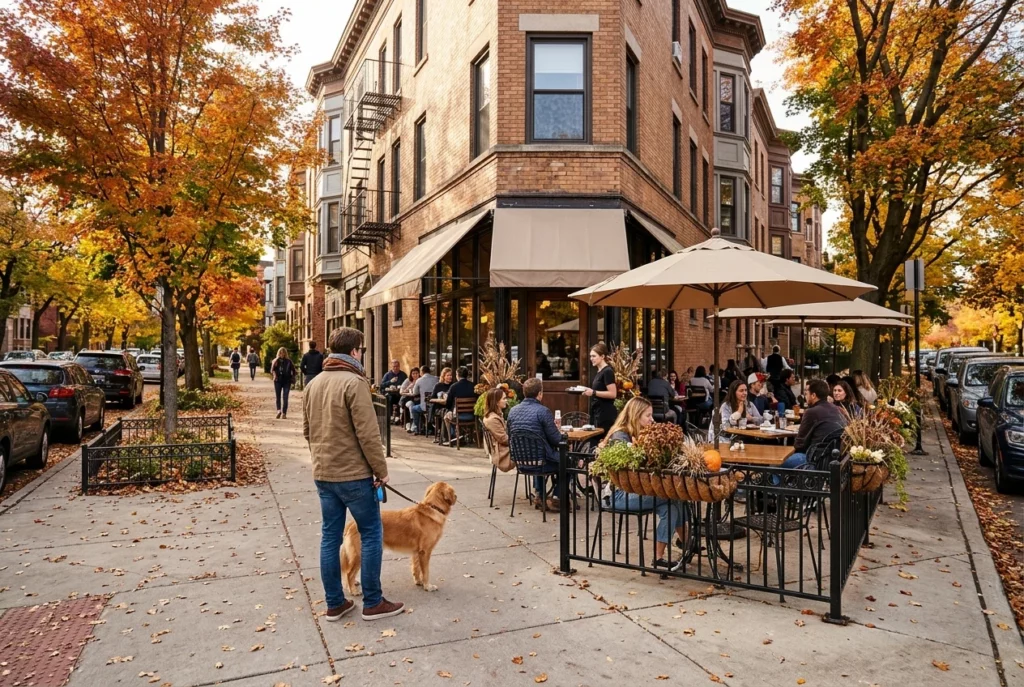
Finding dog friendly cafes in Chicago takes more than a list of names. A cafe that lets dogs sit on the patio can still be a poor match for your dog if the tables are packed against a busy sidewalk, the only shade is across the street, or the bowl is always empty. A cafe that suits a calm senior lab may be miserable for a reactive terrier.
This guide covers what to judge at each cafe, how neighborhood character affects the visit, and how to check a policy before you leave the house. I have left out a ranked list of named cafes on purpose. Patio setups, staffing and rules change from season to season, and a stale list sends you to a closed gate with a dog and a hot drink in your hands.
What dog-friendly really means at a Chicago cafe
The phrase covers three different situations, and cafes use it loosely.
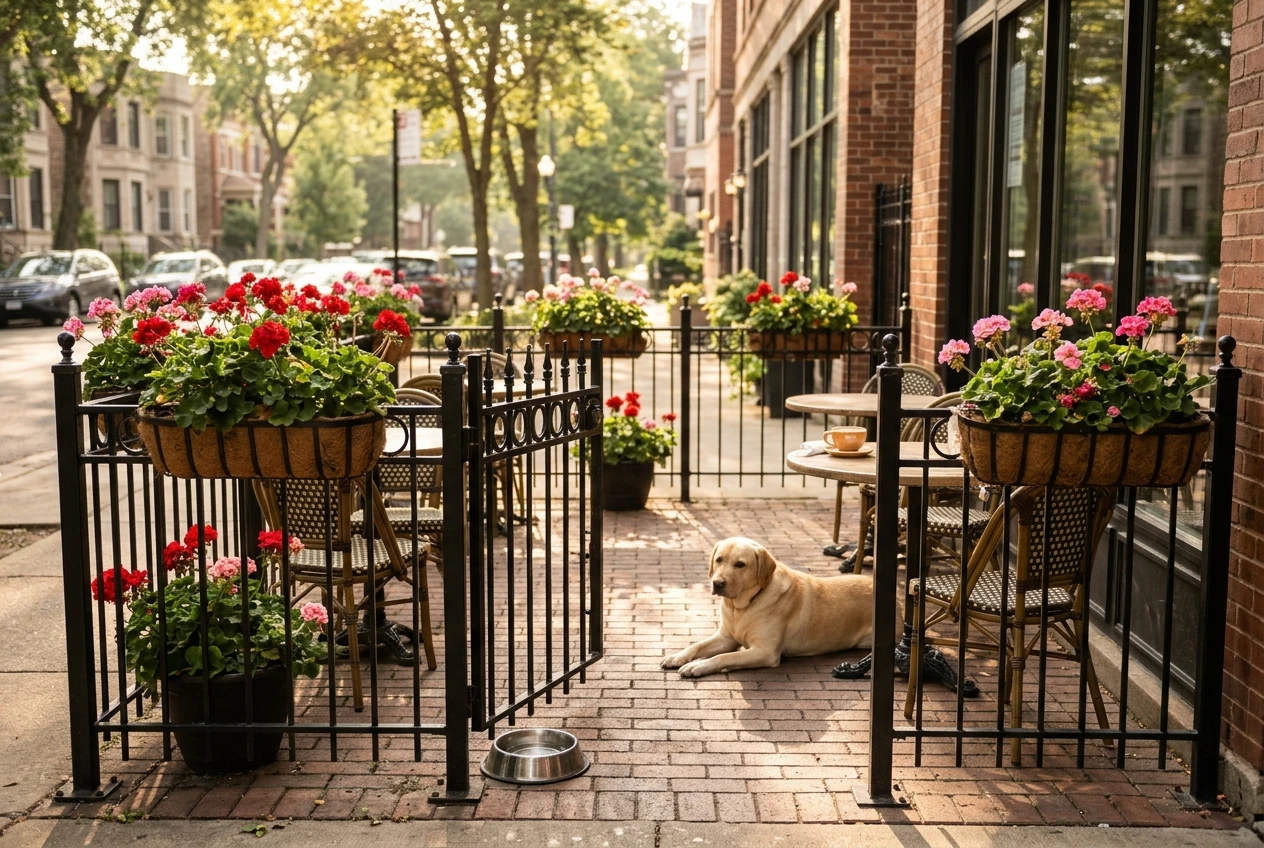
- Patio welcome: Dogs are allowed in the outdoor seating area. This is the most common arrangement and the one most dog owners mean.
- Indoor welcome: Dogs are allowed inside. This is rare, because food safety rules in Illinois generally restrict animals inside food establishments to service animals. Outdoor dining areas are usually left to the owner’s discretion.
- Takeout-only tolerance: Your dog can wait with you on the sidewalk while you order at the window or counter, but there is no seating for dogs. This is tolerance, which is not the same as being welcoming.
Service animals are a separate legal category, and cafes are generally required to admit them. A pet dog in a vest bought online is not a service animal, so do not use one to get through a door. It makes things harder for the people who depend on that access.
Because most of the welcome is outdoors, the season matters. Patios in Chicago open and close with the weather, and many shut down or shrink when it turns cold. In late October, a cafe that was perfect in July may already have stacked its chairs.
How to judge a cafe: the checklist a dog owner actually needs
Before you pick a spot, run it through these questions. Each one affects whether your dog will relax or spend an hour straining at the leash.
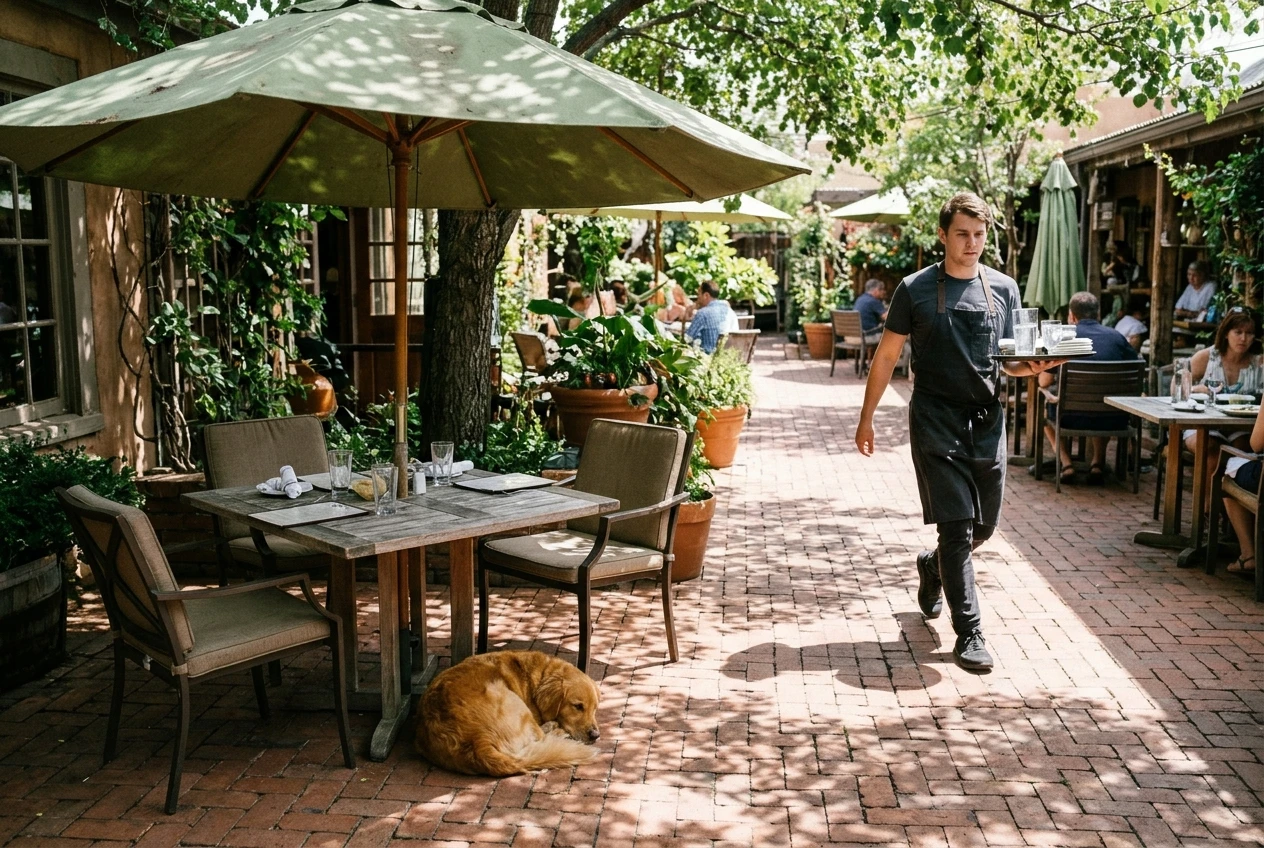
- Patio space: Can you tuck your dog under or beside the table without blocking a walkway? Servers carrying hot drinks and a dog tail across the path are a bad combination.
- Shade: Pavement and brick hold heat. In summer, a patio with no shade is hard on paws and hard on breathing, especially for flat-faced breeds and thick-coated dogs.
- Water: A bowl at the door is a good sign. If there is no bowl, you will need to carry your own, and a cafe that does not mind that is still fine.
- Foot traffic: A patio on a busy corner exposes your dog to strollers, scooters, skateboards, bikes and other dogs passing at close range. A patio set back from the sidewalk gives your dog more room.
- Noise: Espresso machines, buses, construction and music add up. A cafe that is loud for you is louder for a dog with sensitive ears.
- Surface: Slick tile, hot metal grates and broken glass at the edge of a patio are all worth a look before you sit down.
- Staff attitude: Staff who say “of course, bring them” are different from staff who sigh. You will feel the difference in the first thirty seconds.
Rank these by your own dog’s needs. A dog who loves everyone can handle a crowded corner. A dog who startles easily needs quiet and distance more than anything else on the list.
Matching a cafe to the neighborhood
Chicago neighborhoods differ in the way that matters most for a dog at a cafe: how crowded the sidewalk is and how much space cafes have for patios. These are general patterns to look for. Walk the block before you commit, because every individual cafe is different.
Lincoln Park and Lakeview
These neighborhoods are close to the lakefront and large green spaces, and many residents have dogs, so cafes near the parks tend to see a lot of them. That is good for a social dog and a source of stress for one who dislikes other dogs. Weekend mornings are the busiest. Go earlier or on a weekday if your dog is unsure.
Logan Square and Avondale
Wide boulevards and a mix of residential streets mean some cafes sit on quieter side streets. Look for patios that sit off the main road. A side street spot can feel far calmer than a cafe on a main commercial corner.
Wicker Park and Bucktown
These areas are known for busy intersections and lots of foot traffic, especially in the evenings and on weekends. Patios here often sit right on the sidewalk. That can be fine for a confident dog, but a nervous dog may do better at a different hour or a different spot.
Andersonville and Edgewater
Neighborhood commercial strips with a local, walkable feel often suit a leisurely coffee walk. Check whether tables are spread out or packed together, because that decides how much space your dog gets.
West Loop and the Loop
Restaurant-heavy areas can be loud and crowded at peak times, and weekday lunchtime brings office crowds. Mid-morning or mid-afternoon is usually calmer. Patios here may be shared with neighboring restaurants, so confirm the rules apply where you plan to sit.
Hyde Park and the South Side
Campus areas and residential blocks often have a slower rhythm outside of term-time rush hours. A cafe with a quiet side patio is worth looking for, and you can scout it with a short walk first.
Whatever the neighborhood, a good habit is to walk past a cafe once with your dog before you ever sit down. Watch how close the tables are, how fast people pass, and how your dog reacts.
Different temperaments need different setups, and the right cafe for one dog is the wrong one for another.
Nervous dogs
Look for a corner table with a wall or planter on one side, so your dog is not surrounded. Quiet side streets beat main roads. Choose off-peak hours, bring a chew or a lick mat to give your dog something to do, and keep the first visits short. Ten minutes that end well are better than an hour that ends in panic. If you are weighing a puppy’s reactions, our post on whether your puppy is stressed or misreading signs helps with reading body language.
Reactive dogs
Reactivity usually means distance matters more than anything. Pick a patio with space between tables and a clear exit, ideally one you can reach without walking past other dogs. Arrive when the cafe is nearly empty, sit with your dog facing away from the entrance, and leave before it fills up. Takeout-only spots can also work: order, step a few feet away, and enjoy your drink on a quiet bench instead.
A dog who wants to greet every person and every dog needs a different kind of management. Choose a spot with a little distance from the path, because greeting leaps on a crowded patio are a hazard for servers and customers. Keep the leash short, ask people to wait for a calm sit before saying hello, and do not let your dog drag you toward other tables.
Best spots for puppies and small dogs
Puppies and small dogs have their own needs, and some of these have nothing to do with the cafe.
- Vaccinations come first. Puppies who have not finished their vaccine series should avoid places where many dogs have walked. Ask your vet when your puppy can safely go to public areas. Our post on whether dog parks are good for puppies covers the same caution.
- Look for enclosed or low-traffic patios. A small dog under a chair can be stepped on in a crowd.
- Keep sessions short. Puppies tire quickly, and a tired puppy gets mouthy. A brief stop works better than a long sit.
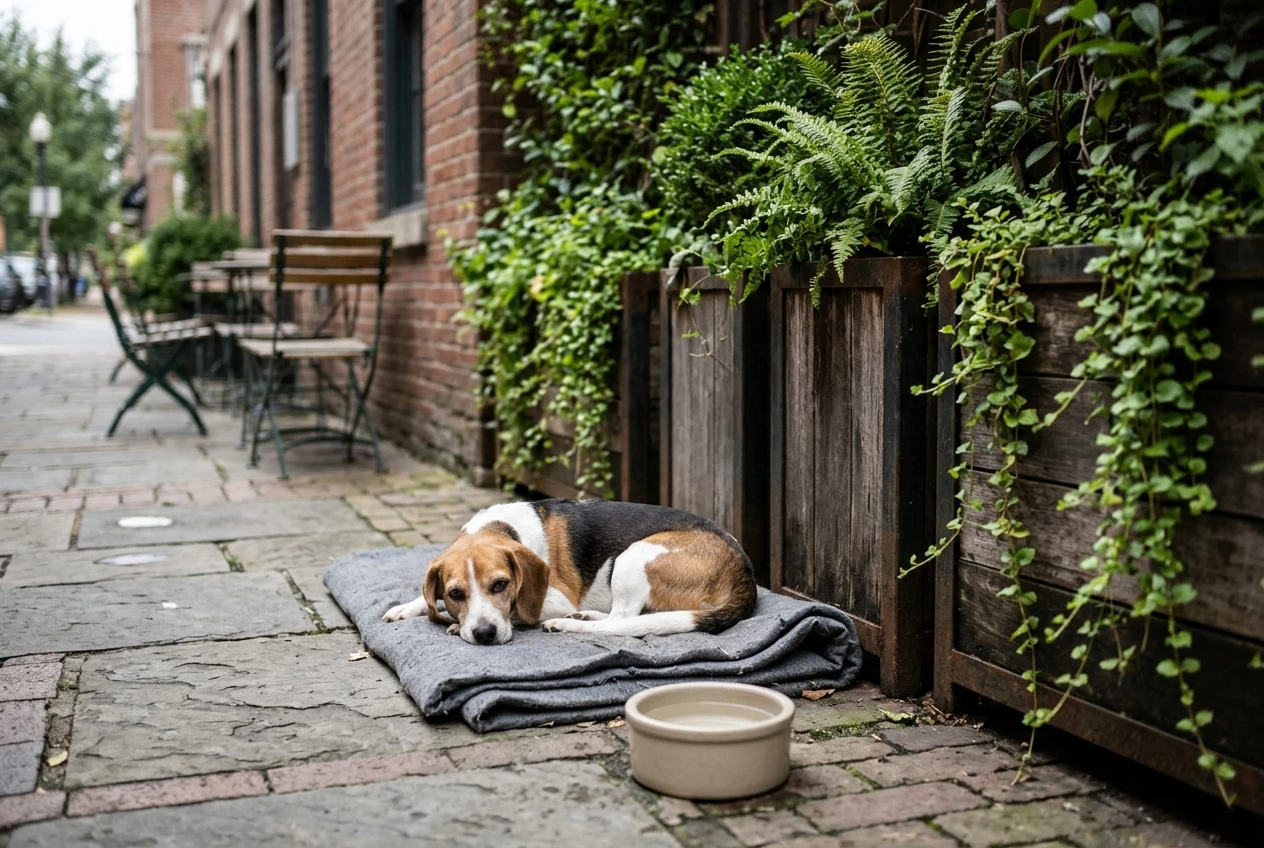
- Bring a blanket or a mat. It gives your puppy a clear place to settle and keeps small paws off hot or dirty pavement.
Small dogs can be carried in a bag or a carrier on the way in, but cafes still decide whether a carried dog counts as a dog on the patio. Ask rather than assume.
How to confirm a cafe’s dog policy before you leave the house
Policies change with ownership, staffing, health inspections and the season. A cafe’s page or an old review is a clue. The cafe itself is the answer. Here is a quick routine.

- Check the cafe’s own website and social media first. Many post patio hours, seasonal closures and dog rules. Look at recent posts, not old ones.
- Look at the newest reviews and photos. Search for the word “dog” in the review section. Recent photos of dogs on the patio are a good sign. Reviews more than a year old are weaker evidence.
- Call or message the cafe. Ask three things: Are dogs allowed on the patio right now? Is there a size or number limit? Is there a quieter time to come? A short call beats a wasted trip.
- Confirm the patio is open. Ask whether the patio is operating that day, since weather and season can close it.
- Read the sign when you arrive. A posted rule at the door overrides anything you read online. If staff say no, thank them and move on without arguing.
Keep a note on your phone of the cafes you have confirmed, with the date you checked. Re-check anything older than a season.
Cafe manners: keeping your dog calm and your table welcome
Cafes that welcome dogs can stop at any time. Good manners are how you keep the welcome.
- Exercise first. A dog who has had a walk is far more likely to lie down. Do not use the cafe as the exercise.
- Keep the leash short and the dog out of walkways. Tuck your dog beside your chair, not in the aisle.
- Bring your own water bowl and a mat. Even if the cafe has a bowl, yours is a backup.
- Clean up immediately. Bring bags and wipes, and handle any accident before staff have to.
- Do not feed your dog from the table. Other customers may have allergies, and food scraps pull your dog toward other tables.
- Watch for stress signals. Yawning, lip licking, turning away, panting without heat and a stiff body mean your dog has had enough. Leave early rather than push through.
- Tip well and thank the staff. A cafe that feels good about dogs stays dog-friendly.
Make it a walk: pairing your cafe stop with a safe route
The best cafe trips fit into a walk. Your dog gets exercise on the way there, settles at the patio, and has a calm walk home. Plan the route as carefully as the stop.
Choose streets with wide sidewalks and few crossings, and watch for the usual city hazards such as broken glass, spilled food and hot pavement. Our guide to city dog walking hazards and safety tips covers what to scan for on the way.
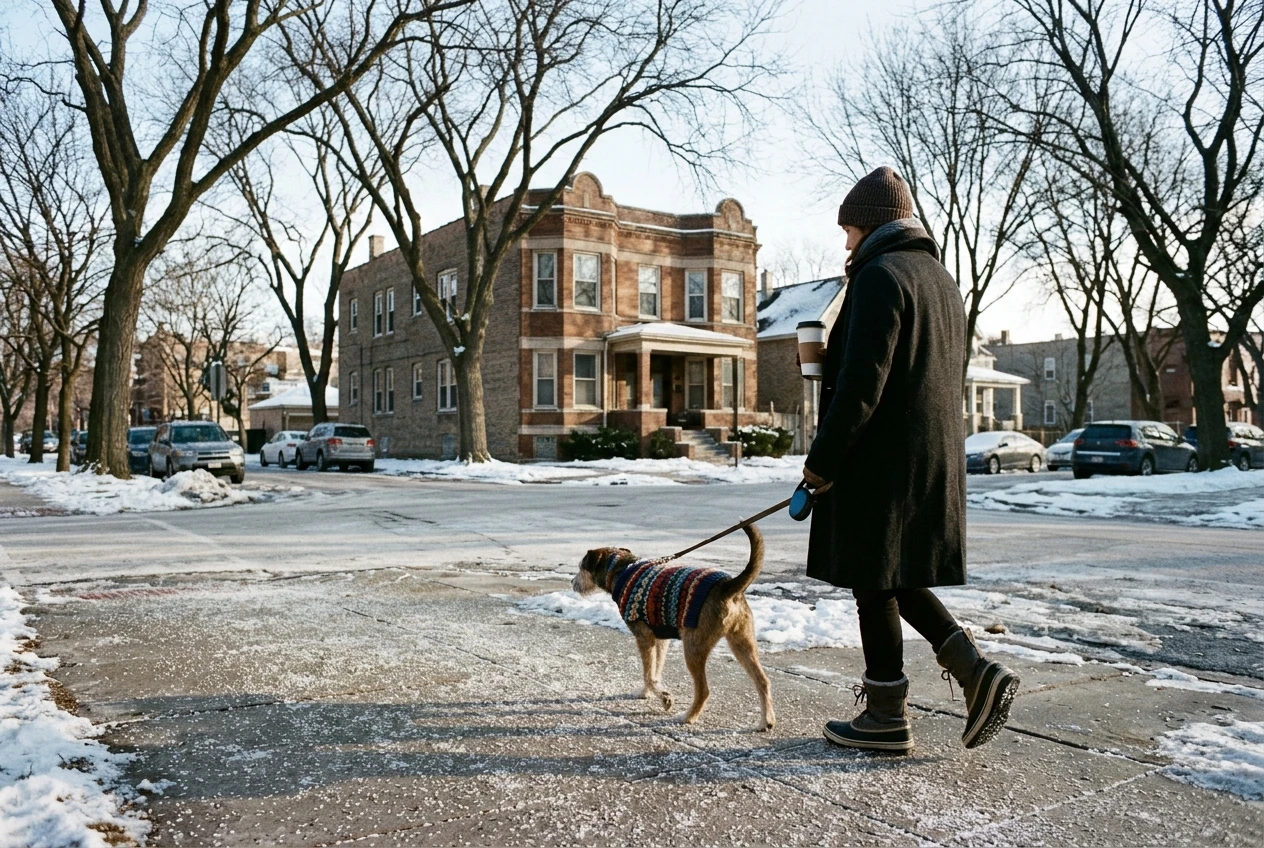
Cold weather changes the plan too. Salted sidewalks irritate paws, short-haired dogs lose heat fast, and patio seating gets uncomfortable. If you walk in winter, see our list of affordable winter dog-walking gear for Chicago before you head out, then call ahead to see whether the cafe patio is open at all.
Start with one or two cafes within a short walk of home, confirm their policies, and visit at quiet hours. Once you know how your dog handles the patio, you can add spots in other neighborhoods.