
City walks pack a lot of small risks into a short distance, and most of them are easy to miss when you’re juggling a phone, keys, a coffee, and a dog who has spotted a pigeon. The most useful city dog safety tips are the ones tied to a specific place, so this article follows a walk from your front door to the park and names what to watch for at each stop. After a few outings you can run through it in your head without thinking.
If you’re reading this because you’re worried about someone else walking your dog in the city, that’s understandable. GreenPaws Chicago’s dog walkers are highly trained in city-walking safety. You can reach out to GreenPaws Chicago to ask how they handle your dog’s needs and your neighborhood’s risks.
Start at your front door: elevators, lobbies, and the first 30 seconds
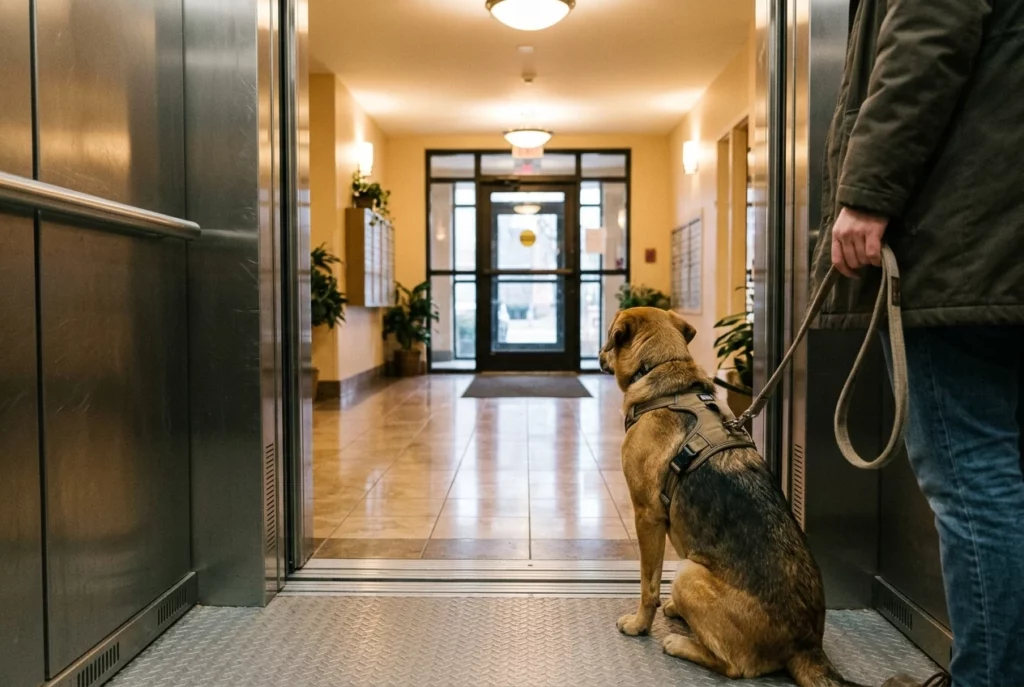
Many problems begin before you reach the sidewalk. Elevators, hallways, and lobbies are tight spaces where your dog is often excited, and the excitement makes the first 30 seconds the least controlled part of the walk.
Elevator doors are the first hazard. A leash stretched across the doorway can catch when the doors close, and a dog who surges out ahead of you can be pulled back or clipped. Shorten the leash before the doors open, keep your dog on your side away from the door, and let other riders go first when you can. If your dog tends to lunge at neighbors, ask them to wait for the next car.
Lobbies and building entrances add three more problems:
- Heavy doors that swing shut on a trailing leash or a tail.
- Slick floors, especially when wet, where nails give no grip and a sudden stop can strain a joint.
- Blind corners where a delivery person, a stroller, or another dog appears with no warning.
Before you step outside, stop at the door and check the setup. Is the harness snug? Is the leash clipped properly? Is your dog calm enough to hear you? A short sit at the threshold lowers the energy, and it gives you one second to look up and see what is on the sidewalk before your dog does.
Sidewalk hazards you only notice once you’re looking
Dogs explore with their noses and mouths, and a city sidewalk is full of things they should not eat or step on. The goal is to scan ahead, about a half block, the way you would while driving.
Dropped food and trash
Spilled takeout, chicken bones, gum, and discarded cigarette butts all end up on the pavement. Some of it is dangerous: xylitol, a sweetener common in sugar-free gum and candy, is toxic to dogs, and so are chocolate, grapes, and raisins. Cooked bones can splinter.
Teach a reliable “leave it” at home, where it is easy, then use it outside. Scan ahead and steer your dog to the far side of the sidewalk when you see food. Garbage days, when bags pile up along the curb, are worth a wider berth or a different route.
Broken glass and sharp debris
Glass collects near bars, bus stops, and the edges of parking lots. It cuts paw pads, and the cut often goes unnoticed until you see blood on the floor at home. Look at your dog’s paws after each walk, spreading the toes and checking between the pads. Limping, licking one paw, or leaving small red prints are all signs to look closer.
Hot pavement
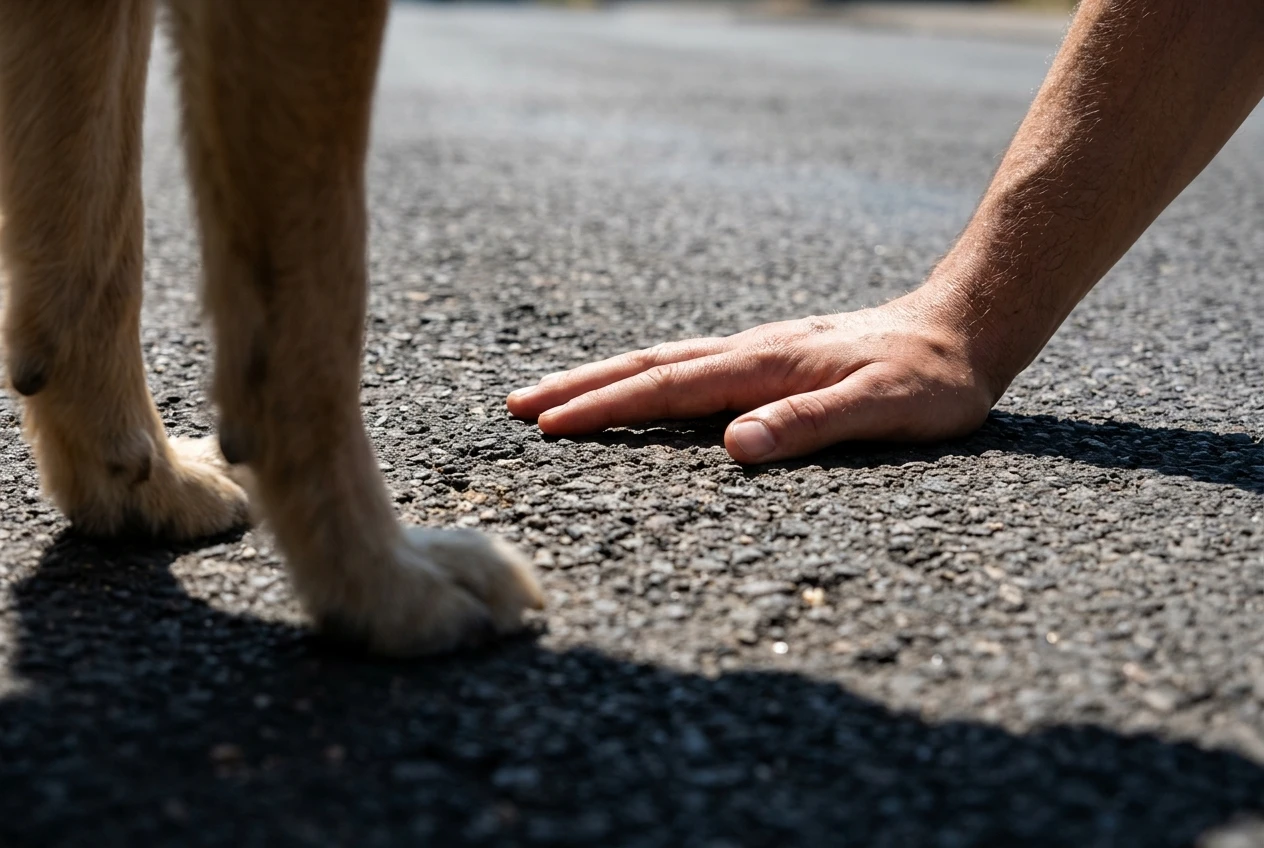
Asphalt and concrete in direct summer sun can be much hotter than the air, and dogs walk on bare pads. A simple check: press the back of your hand to the pavement for seven seconds. If you can’t keep it there comfortably, it is too hot for paws. Walk early or late, stay on grass or shaded stretches, and remember that dark asphalt holds heat long after the sun moves on.
Chemicals and other surprises
Lawn treatments, pest-control bait near building foundations, and puddles by parked cars (which can carry antifreeze) are all worth avoiding. Keep your dog away from standing water and any area that looks recently treated or has warning flags posted.
Crosswalks, cyclists, and scooters: keeping your dog predictable near traffic
Traffic is the highest-stakes part of any city walk, and what protects your dog is predictability. A dog who sits at every curb is easier to protect than a dog who drifts toward the street.
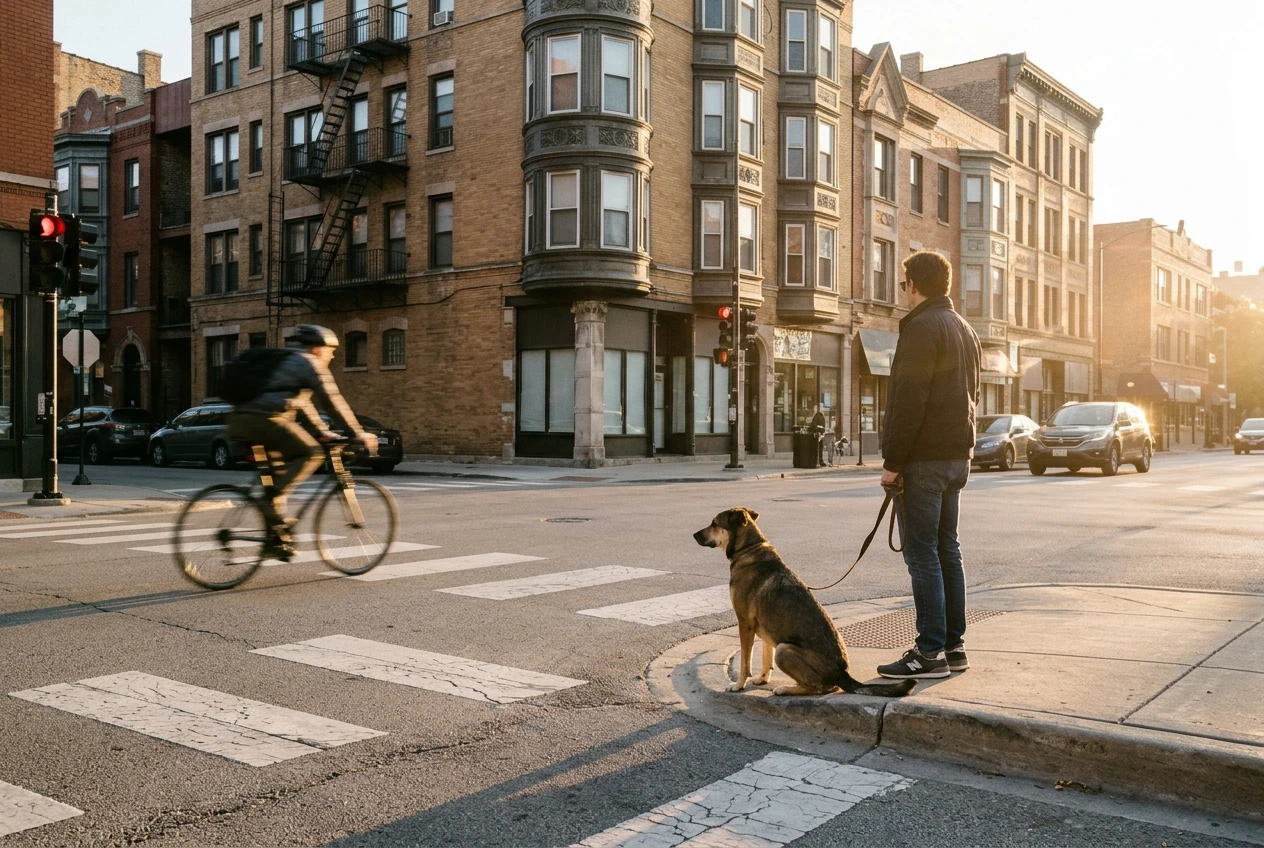
Make the curb a stopping point. Ask for a sit or a pause at the edge of every crosswalk, even when no cars are coming. Repeated daily, it becomes a habit that holds up when a car turns suddenly or a siren goes off.
Some specifics for crossing:
- Wait for the full signal and keep your dog on the side away from the street.
- Watch for cars turning right on red, which often creep forward while the driver looks left.
- Keep the leash short near the curb, with enough slack that your dog is not pulled off balance.
- Cross at the corner. Midblock crossings put you between parked cars where drivers cannot see a dog.
Cyclists, e-bikes, and scooters are quiet and fast, and they often ride on sidewalks. A dog who startles or lunges at a moving wheel can dart into your legs or the street. When you hear one coming from behind, shorten the leash and move your dog to the inside edge, away from the path. Treat your dog for staying calm as it passes. This practice, repeated on quiet streets, makes busy ones easier.
Retractable leashes are a poor fit here. They give your dog room to step into a bike lane or street, and the thin cord is hard to control and can burn skin or tangle with a passing wheel. A standard leash of about four to six feet gives you more control.
Crowds, strangers, and other dogs: reading a tight situation early
Most conflicts on a crowded sidewalk show warning signs well before anything happens. Learning those signs lets you leave before a situation escalates.
Watch your own dog’s body first. A stiff body, a hard stare, a closed mouth, raised hackles, a tucked tail, or a sudden freeze all mean your dog is uncomfortable. Lip licking, yawning, and turning the head away are milder signals of stress. If you want a closer look at how dogs communicate this way, the post on misreading your puppy’s signs covers the body language in more detail.
When another dog approaches, the leash tension matters. A tight leash tells your dog something is wrong and can create the tension you hoped to avoid. Move to a wider angle, put space between the dogs, and keep walking at a steady pace instead of letting the dogs meet head-on on a narrow stretch.
You also do not owe anyone a greeting. “He’s friendly” is something many owners say about dogs who are not. A polite “we’re training, sorry!” is enough to keep distance, and you can cross the street without explaining. Strangers who want to pet your dog can be asked to wait, or told no. Reaching over a dog’s head and crowding into a small space are common triggers.
If a situation tightens, create distance early:
- Turn and walk the other way at a calm pace.
- Put a car, a planter, or a doorway between your dog and the trigger.
- Use treats to keep your dog’s attention on you.
- Step into a store entrance or around a corner to give your dog time to settle.
Collars, harnesses, leashes, and ID: the setup that holds when your dog panics
A frightened dog pulls harder, twists, and backs out of equipment that looks secure on a calm day. Check your gear for the worst moment, not the average one.
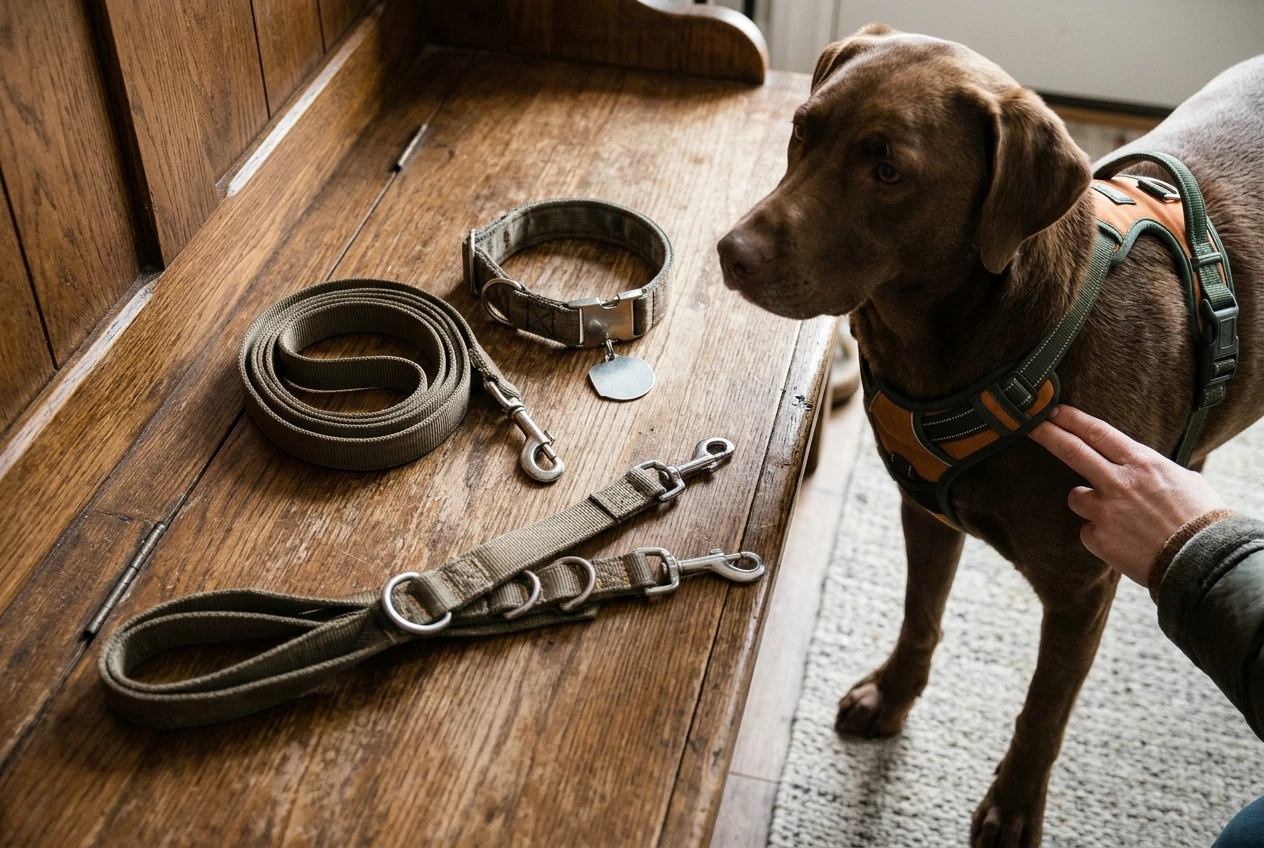
Collar or harness fit. A flat collar that slips over the head is a risk for dogs with narrow heads. A properly fitted harness is usually the more secure choice. You should be able to fit two fingers under any strap, with no more room than that. Check the fit again after grooming, weight changes, or a growth spurt. A martingale harness, which tightens slightly under tension without choking, suits dogs who back out of regular ones.
Back-clip versus front-clip harness. A front clip harness gives more steering control for dogs who pull. A harness with two attachment points, used with a double-ended leash, adds a backup connection (good for very larger strong dogs).
Hardware. Check clips, stitching, and D-rings every month for rust, fraying, or a clip that sticks. Replace anything that looks worn, because the failure will happen under strain.
ID. Keep a tag on the collar with your phone number, since collars are the first thing a stranger checks. Microchips help only when the registration is current, so confirm your contact details with the chip registry. Some owners add a second tag on the harness in case the collar comes off.
It also helps to take a clear photo of your dog every few months. If your dog goes missing, a current picture shows color, size, and markings much better than a description does.
What to do when something goes wrong: a plan for a bolt, a bite, or something swallowed
Decide what you will do now, because you will not think clearly when it happens.
A bolt
If your dog slips the leash, running after them often makes them run faster. Stay still, use a happy voice, and call them. Crouch down, move away, or drop to the ground to make yourself more interesting. Do not scold when they return, since that teaches them that coming back is unpleasant. If you cannot reach them, track the direction, ask bystanders to stay back instead of cornering your dog, and alert your building’s front desk and nearby shops. Then contact local shelters, post to neighborhood groups, and call your microchip registry to flag the chip.
A bite
If your dog is bitten, or bites someone, separate the animals calmly and move to a safe spot. Wash any wound with soap and water, exchange contact information with the other owner, and see a vet for any bite, since punctures can look small and still become infected. If a person is bitten, they should get medical care, and local rules may require a report. Your vet can advise on records and vaccination proof.
Something swallowed
If your dog swallows something they should not have, call your vet, an emergency clinic, or a pet poison hotline right away. Have the product, the amount, and your dog’s weight ready. Do not induce vomiting unless a professional tells you to, because some substances cause more harm coming back up. For a medication example, the post on what to do when a dog eats a pill off the floor shows how to think through that kind of call.
Save the numbers for your vet and the nearest 24-hour emergency clinic in your phone’s favorites, before you need them.
Building a safer routine: routes, timing, and practice
A safe walk usually depends on decisions made before you leave. Routes, timing, and rehearsal do most of the work.
Choose routes on purpose. Pick a few reliable loops with wide sidewalks, plenty of crossings with signals, and few trash piles. Keep one quiet backup route for days when your dog is nervous or the main route is busy with construction or events. Walking the same loops lets you learn where the glass collects, where the loose dogs live, and which corners have poor visibility.
Time walks around the crowds. Rush hour, school pickup, and weekend evenings bring the most foot traffic, scooters, and dogs. Early mornings and late evenings tend to be calmer, and in summer they are cooler on the pavement.
Practice before you need it. Skills like “leave it,” sit at the curb, a reliable recall, and calm greetings should be rehearsed on quiet streets, then in busier places, in small steps. Pay your dog well when they get it right near a distraction. If your dog is a young puppy, how far and how long you walk matters too, and the post on walking a 12 week old puppy covers that.
Stay present. The simplest habit is to keep your phone in your pocket in crowded stretches. Most of the hazards above are visible a few seconds early, and a few seconds is often enough.
Run down the safety checklist
Run through these in your head at each stop on your next walk:
- Door and elevator: short leash, dog beside you, harness checked, pause at the threshold.
- Sidewalk: scan half a block ahead for food, glass, and chemicals, and test the pavement with your hand.
- Crosswalk: sit at the curb, dog on the far side from traffic, wait for the full signal.
- Bikes and scooters: shorten the leash and move to the inside edge.
- Crowds and dogs: read body language early, create distance, and say no to greetings when you need to.
- Gear: two fingers under the straps, hardware inspected, tag on, microchip registration current.
- Emergency: vet and 24-hour clinic numbers saved, a plan for a bolt, a bite, or something swallowed.
Run down the safety checklist on your next walk, then repeat it until it takes no effort.