
For the families I worked with at Chicago Urban Pets, affordability mattered. They wanted to take good care of their dogs without buying every product someone called a must-have.
That’s how I approach winter gear, too. I pay attention to how something fits, how easily it goes on, and whether it makes sense for the walks we actually take. A jacket can look great online and still be frustrating when you’re trying to get out the door.
Here’s what I’d consider for everyday Chicago walks, including a few things I’ve used and where I’d be careful about spending more.
The products from my original winter guide
If you’re looking for the specific products from my original guide, I’ve gathered the Amazon links here. You don’t need everything on this list. Start with what solves a problem for your dog, and check the current listing and sizing before ordering.
Disclosure: As an Amazon Associate I earn from qualifying purchases.
Jackets to compare
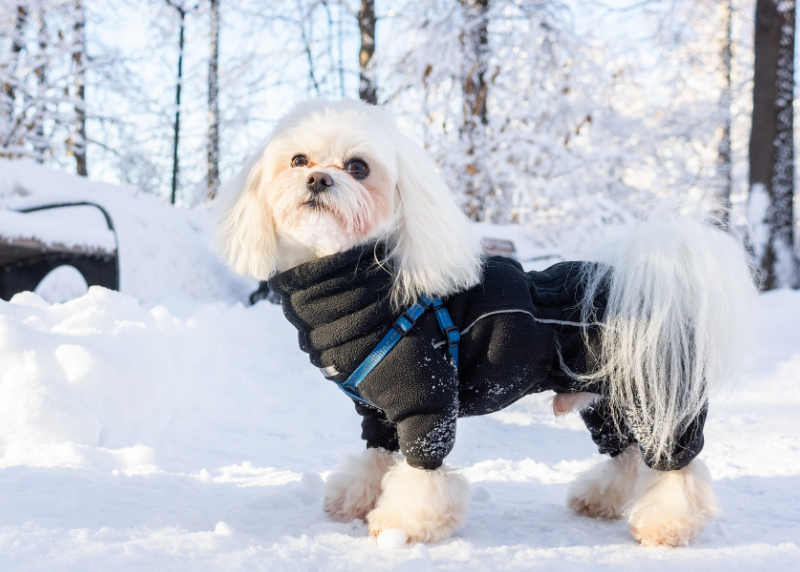
- FUAMEY winter jacket with built-in harness — the fleece-lined, back-zip style shown in my guide.
- FUAMEY coat for small dogs with built-in harness — the smaller-dog style shown in rose pink. Check the exact measurements rather than choosing by the size name alone.
- IECOii winter coat with adjustable buckles — another jacket from the guide to compare for fit and ease of fastening.
- Hurtta Expedition Parka, original model — included for comparison. As I explain below, this wasn’t my best-value choice for ordinary city walks. My experience is with the original, not the Expedition Parka II.
Paw protection
- PawZ rubber dog boots — the practical rubber option I’ve used. Measure carefully; a rubber barrier is not the same as an insulated boot.
- Musher’s Secret paw balm — my fallback when boots aren’t working, alongside choosing a less-salted route. It doesn’t provide traction on ice.
- Cdycam rubber rain boots — another option from the original guide. Check the fit and intended use rather than assuming rain boots provide winter insulation.
- QUMY dog boots — an option I’ve used with my dog-walking clients, replacing the Muttluks link from the original guide. These have structured rubber soles rather than the original Muttluks’ flexible leather soles. Check the paw measurements and fit before ordering.
Optional extras from the guide
- Petkin Big N’ Thick Paw Wipes — an optional cleanup product. Water and a clean towel are still a useful starting point.
- Petpost wrinkle wipes — intended for dogs with facial folds; not something every dog needs. Follow the product’s directions for the area you’re cleaning.
- Mihachi cable-knit turtleneck sweater — a sweater I’ve used with my dog-walking clients, replacing the Kuoser link from the original guide. Treat it as an optional layer, not a substitute for a suitable winter coat. I’d generally prioritize a practical jacket when buying one winter layer.
- Dimicoo breathable mesh dog boots — boots I’ve used with my dog-walking clients, replacing the HiPaw link from the original guide. This breathable style is intended for medium and large dogs; check the paw measurements carefully. These are not insulated winter boots.
Start with your dog and the walk
Before heading out, check the National Weather Service’s Chicago forecast and weather alerts for conditions that could affect your route.
Before shopping, look at what you already have. Does the harness fit? Does your dog tolerate the boots sitting by the door? Is the coat comfortable enough for normal movement and a potty break?
Winter needs vary. A small, thin-coated dog can have a different experience from a large dog with a thick coat. Age, health, wind, wet weather and time outside matter, too. There isn’t one temperature or outfit that works for every dog. Cornell’s winter guidance is a useful starting point.
Think about your usual outing. Getting through a neighborhood potty walk and spending an hour hiking through snow are different jobs. Your purchases should reflect that. If you’re deciding how much walking fits your routine, read my guide to how long dog walks should be in the city.
Get the harness and jacket working together
I prefer attaching the leash to a harness rather than a collar. I’m less interested in recommending one brand to everyone than helping people find a setup that works for their dog.
Pay attention to whether you use a front or back attachment. A jacket’s opening needs to line up with the connection you actually use. Otherwise, you can end up with two perfectly usable products that are awkward together.
I like jackets with a built-in harness because they reduce the number of steps. Before relying on one, check that the manufacturer intends the attachment for leash use and that the whole setup fits securely. A decorative ring or a harness-access opening isn’t enough to establish that.
Try everything together indoors before heading outside. If your dog is hesitant about new gear, the American Kennel Club has a step-by-step guide to helping your dog get comfortable wearing winter clothes and boots.
Why I’d usually choose an easy-on jacket
For everyday winter walks, I prefer a jacket with straightforward straps over a sweater that may leave you needing to buy another layer when the weather gets colder.
A sweater can have a place in a dog’s wardrobe. My concern is the extra purchase when someone is trying to prepare for Chicago winter on a budget.
Look at coverage and function before color. Can your dog walk freely? Does the jacket stay in place? Can they go to the bathroom without soiling it? Is it suitable for the wet or windy conditions you expect?
Then think about putting it on. Easy straps matter to me. Check how the fasteners work with your dog’s coat and whether you can manage them comfortably.
You don’t have to start with the most expensive option. Start with something appropriate for your dog that you’ll be able to use consistently.
I’ve used the Hurtta Expedition Parka. For normal city walks, I didn’t feel the expense and extra effort of putting it on were worth my money.
That’s a judgment about my use, rather than a reason nobody should buy one. Someone preparing for longer snowy outings may prioritize different features. For the everyday walks I’m talking about here, I’d put ease of use and budget higher on the list.
For packing ideas beyond a quick neighborhood walk, see my fall hiking essentials and recommendations, and adapt your plans to winter conditions.
One important detail: Hurtta now sells an Expedition Parka II. My experience with the original coat shouldn’t be treated as a review of that newer version. Check the exact model before comparing recommendations.
Boots need to fit the paws in front of you
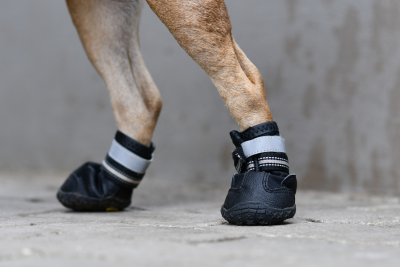
Boots can help reduce contact with salty sidewalks, but the useful pair is the one that fits and your dog can tolerate.
PawZ rubber boots are among the options I’ve used. I like the practicality of an inexpensive rubber option when boots get lost. Replacement cost matters alongside the price of the first set.
That doesn’t mean rubber boots fit every dog. Measure and follow the particular product’s sizing instructions. Watch your dog move in them, check that they’re secure without rubbing, and inspect their paws after wearing them.
Also, separate protection from insulation. PawZ describes its boots as having no padding or sole. Don’t assume that a rubber barrier provides the warmth of an insulated boot, or that either makes a long outing safe in severe cold. Follow the manufacturer’s wear instructions and remove boots when you get home.
Have a plan for when boots don’t work
Sometimes a boot comes off. Sometimes a dog refuses them altogether.
Musher’s Secret is my fallback in those situations, along with avoiding salted sidewalks as much as possible. I wouldn’t treat balm as permission to keep walking through a heavily treated area.
If a small dog is bothered by a salty patch and you can safely carry them, carrying them past it may be an option. That won’t work for every dog or every person, so choose the route with your own situation in mind.
Balm also doesn’t provide traction on ice. Musher’s says that explicitly in its product FAQs. Watch where both of you are stepping.
Whatever you use, pay attention to your dog. Gear is only part of the plan. My guide to what dogs need to stay healthy covers the everyday care that goes alongside your walking routine.
The walk ends with a quick cleanup
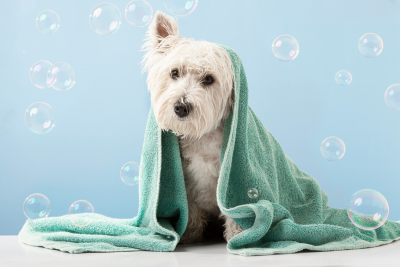
When you get home, remove wet gear and clean and dry your dog’s paws. Check between the toes for snow, salt and irritation. The ASPCA recommends washing and drying feet after winter walks, with attention to cracks and redness.
You don’t need to turn this into another shopping list. Have water and a clean towel ready. If you use wipes, choose something appropriate for the area you’re cleaning and follow its directions.
While you’re outside, shivering, lifting paws or refusing to continue are reasons to head somewhere warm and dry. If you suspect frostbite or hypothermia, seek veterinary care immediately.
What I’d prioritize on a budget
I’d start with a secure leash setup, an appropriate jacket if my dog needs one, and a realistic paw-protection plan. Check what you already own before replacing anything.
Then consider the things that affect everyday use: getting dressed, staying comfortable, cleaning up and replacing a lost boot.
That’s where the value is for me. A manageable routine makes it easier to use the gear you’ve bought. For more ways to keep costs manageable, read my eight tips for saving money as a dog owner.